Ghostwatch and the authority of a familiar broadcast
How the frame of a live report gives the 1992 television drama its unusual kind of suspense.
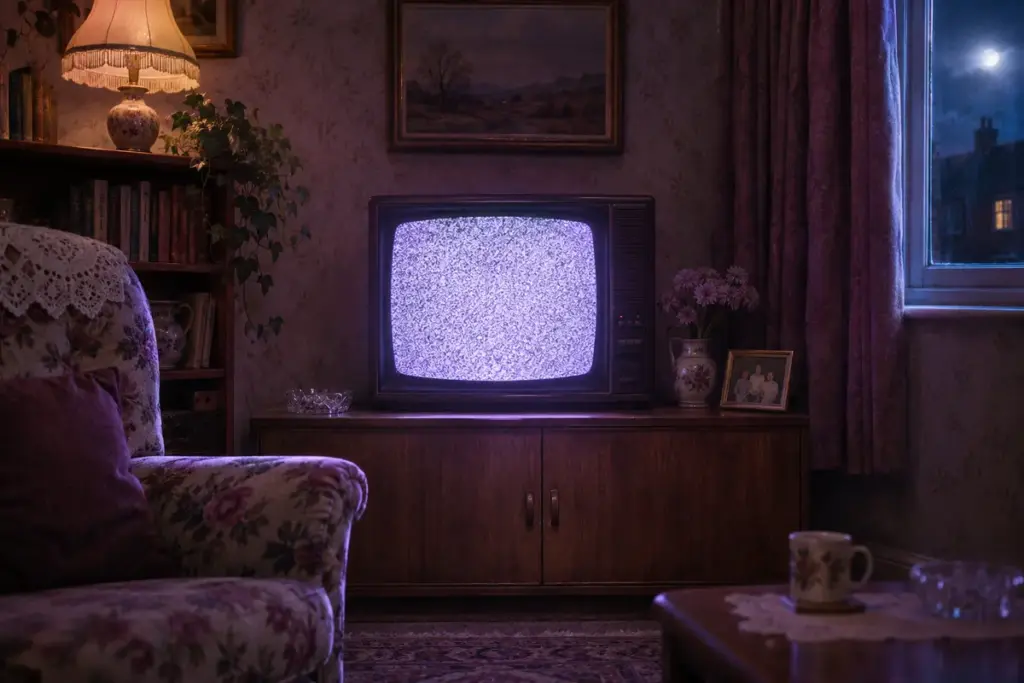
Ghostwatch asks viewers to bring habits from an ordinary television programme into a supernatural story. The report appears to be in progress. Familiar presenters listen, pass questions and hand the picture from one place to another. The shape of a broadcast makes it easy to grant authority to something before pausing to decide what the camera actually showed.
The format earns the first minutes
Stephen Volk wrote the 1992 drama and Lesley Manning directed it. Volk’s project page and the BFI’s screening notes describe its performance of live television. The technique works through familiar handovers and delays. A presenter can be entirely accustomed to the procedure while a picture arriving from another room starts to make the procedure feel inadequate. Stephen Volk’s Ghostwatch page and BFI programme notes.
A useful comparison is a viewer who comes to it labelled as drama and another who first encounters a brief clip. Both can recognise the conventions. The second has less context for deciding why the format feels familiar or why somebody would have built fiction out of it. That is part of what makes the programme still worth discussing as television.
The archive page returns to the form of the production. It leaves the individual appearances and the ending for a first viewing.