Cut the dialogue and keep the room
An editing exercise in room tone, clip fades and the difference between a quiet horror scene and a gap on the timeline.
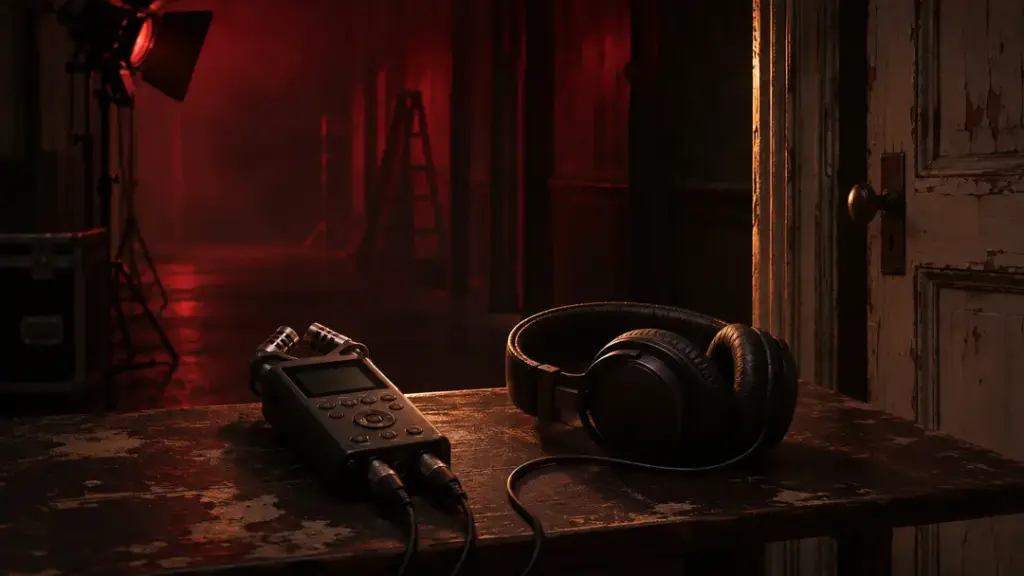
In an imagined shot, a person in a narrow hall says, “Don’t open it.” The reverse angle holds on a closed door. If the background sound drops out exactly at the cut, the room seems to disappear with the speaker. The door has had no chance to do anything.
Try keeping a low, continuous bed under the edit. Room tone gives the shots a shared place. It also makes the silence left by a line of dialogue more expressive. The exercise below uses an imagined scene and works with any editor that can layer audio and crossfade clips.
Listen to the empty stretch
Pick a clean stretch from the same room with no speech, handling noise or distinctive event. The small fan you can hear underneath the dialogue may be part of the room. A chair scrape or somebody’s breath close to the microphone may draw attention every time the stretch is repeated. Listen to the isolated audio before deciding what counts as clean.
Put the room tone on its own track so it can pass underneath both shots. Adjust clip gain by ear while listening to the dialogue and the cut together. The aim of this pass is to make the change of angle feel continuous. Where two sections of tone join, a short overlap and crossfade can help with an audible join. Take out the seam you hear rather than giving every edit the same fade.
Fairlight in DaVinci Resolve supports layered takes and crossfades. That is enough for this exercise. You can do it with the clips and faders before reaching for noise reduction or a library effect. Blackmagic Design’s Fairlight overview.
Leave one sound with a purpose
Play the door shot three ways. Start with the hard cut into silence. Then try the room tone alone. Finally, leave one faint sound, such as a light contact with the handle, in a different place in the pause. The first version may feel like a break in the recording. The second gives you time to look at the door. The third changes what you suspect is behind it. Choose based on which moment the scene needs.
Listen once at a modest level without looking at the timeline. If the cut still calls attention to itself, try a cleaner stretch or listen for a change in the room’s character between the two takes. If the two backgrounds sound like different rooms even with the fade, listen for the mismatched fan, reverb or exterior noise before extending the fade.
The useful comparison is the very same pause with and without the bed. Keep the version that lets the audience hear the room without making the room the subject. The same principle of giving an element a specific job comes up when a film has to make a chat window or a webcam carry a scene. How Livescream gives the screen three jobs.